
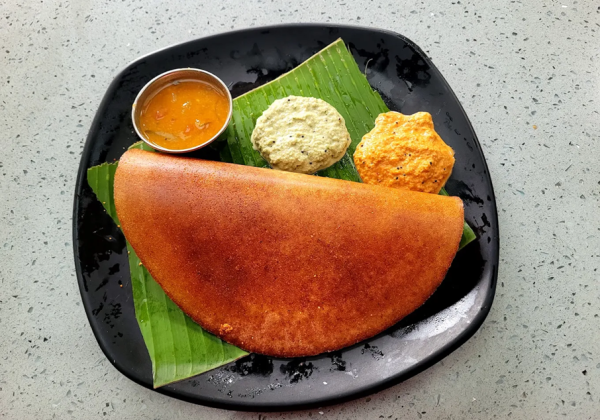
There are some dishes that don’t need an introduction—and masala dosa is one of them. Crisp on the outside, soft on the inside, and filled with a warm, spiced potato masala, it’s a dish that instantly feels familiar.
Whether enjoyed at a small neighborhood eatery, a bustling street stall, or at home on a slow weekend morning, classic dosa carries comfort in every bite. No matter where you first tasted it, this iconic South Indian breakfast dish almost always feels like home.
What Is Masala Dosa?
Dosa is a traditional South Indian dish made from a fermented batter of rice and urad dal. The batter is spread thin on a hot tawa and cooked until golden and crisp. Once ready, it is filled with a mildly spiced potato masala prepared using boiled potatoes, mustard seeds, curry leaves, onions, green chilies, and turmeric.
Masala dosa is traditionally served hot with:
Coconut chutney
Sambar, a lentil-based vegetable stew
Simple ingredients, balanced flavors, and perfect textures—that’s the magic of masala dosa.
The Origins and History of Masala Dosa
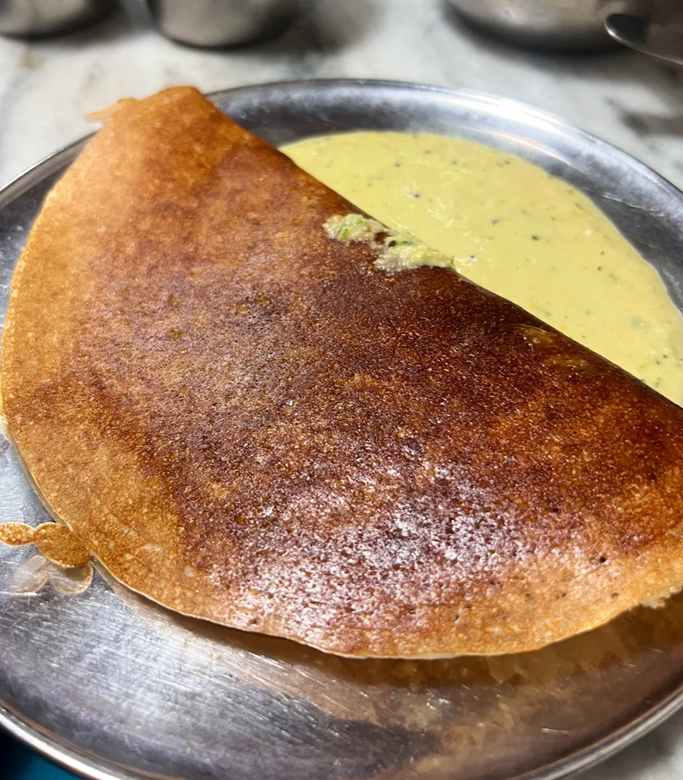
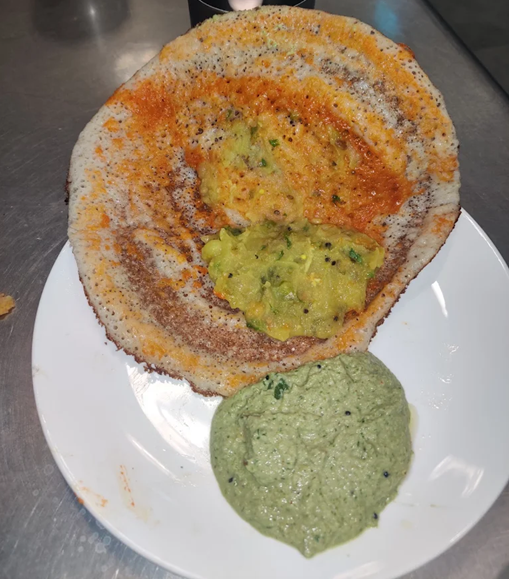
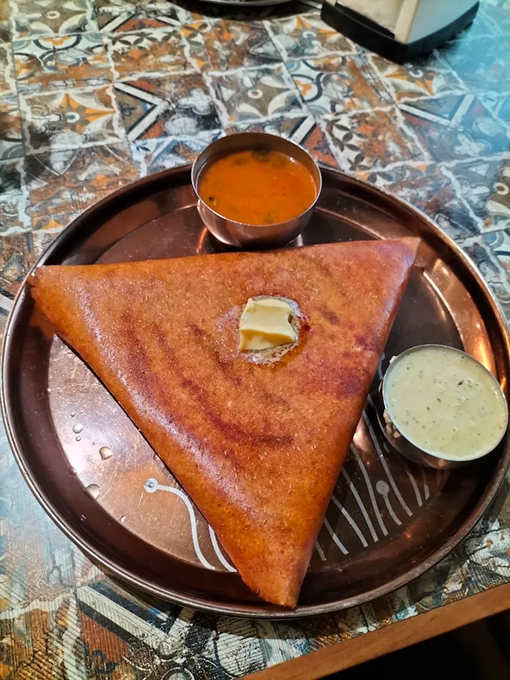
Masala dosa traces its roots to South India, particularly Karnataka and Tamil Nadu, where fermentation, patience, and balance form the foundation of everyday cooking. What likely began as a simple, nourishing meal slowly evolved into one of the most loved Indian dishes across generations.
The beauty of masala dosa lies in its restraint. It doesn’t rely on heavy spices or rich gravies. Instead, it celebrates technique—the slow fermentation of the batter, the precise heat of the tawa, and the harmony between the crisp dosa and its soft, spiced filling.
Learn more about the history of dosa on Wikipedia (Dosa).
Why Masala Dosa Feels So Comforting
This dosa isn’t loud or overwhelming. The flavors are gentle, the spices comforting rather than intense. The aroma of ghee on a hot tawa, the golden crust forming slowly, and the crackle when the dosa folds—these small details create an experience that feels grounding.
It’s the kind of food that works at any time of day:
Breakfast with filter coffee
Lunch at a busy restaurant
A light dinner or late-night snack
Few dishes manage to feel this timeless and reassuring.
From South Indian Homes to the World
What began as a regional dish has now traveled far beyond its origins. Today, masala dosa can be found everywhere—from street-side stalls to high-end restaurants across the world.
Modern variations may include butter, cheese, or fusion fillings, but the classic version with coconut chutney and sambar remains unmatched. It proves that good food doesn’t need to be complicated—tradition often speaks the loudest.
Tip: If you enjoy a richer flavor, ask for a ghee roast dosa with masala —extra crisp and aromatic.
Must-Try Masala Dosa Places in Bangalore
Bangalore plays a key role in shaping modern dosa culture. If you’re visiting, these spots are worth trying:
CTR (Central Tiffin Room) – Famous for its crispy butter dosa and classic coconut chutney
Vidyarthi Bhavan – A legendary eatery known for thick, crisp dosas and rich potato masala
MTR (Mavalli Tiffin Room) – Known for its traditional flavors, soft dosas, and comforting sambar
Rameshwaram Cafe – A modern favorite offering ghee-rich dosas, bold flavors, and a lively atmosphere
- (Menus and crowds change—check timings before you go.)
Final Thoughts
In a world of fast-changing food trends, masala dosa remains timeless. It doesn’t try to impress—it simply delivers. Crispy, warm, familiar, and deeply satisfying, it’s a reminder that some flavors stay with us forever.
No matter where you are, one bite of a good masala dosa is often enough to feel at home.
Similar emotional connections can be found in iconic street foods like Golgappa, a snack that instantly brings back shared memories and joy.